Displaying Values on a Map Using StyleBI: A Powerful Use Case
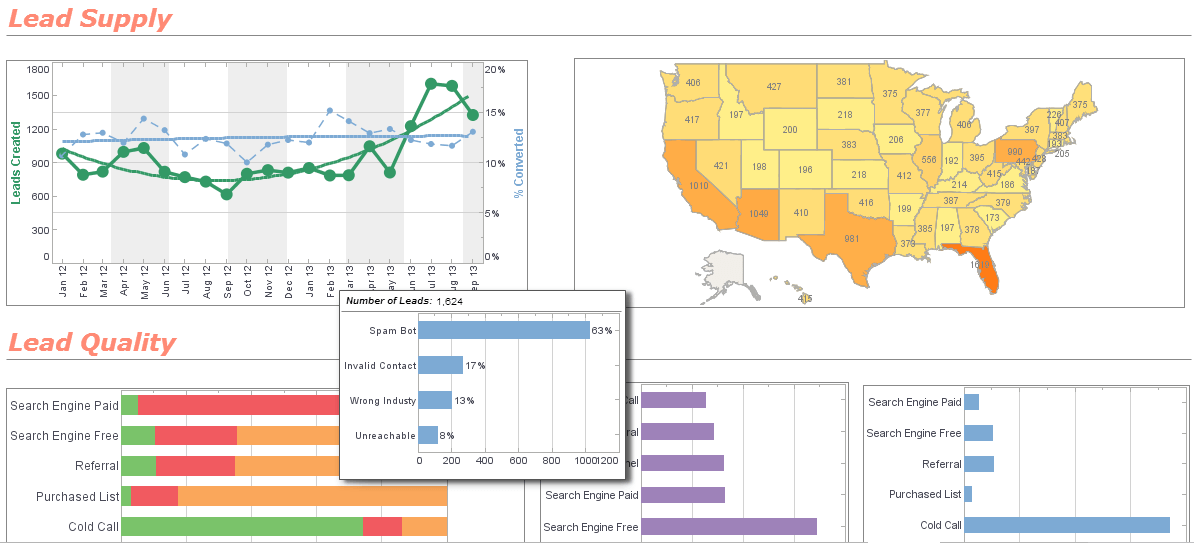
Geospatial visualization is one of the most compelling ways to make data immediately understandable, and StyleBI offers powerful capabilities for turning raw numbers into meaningful maps. Mapping data is not just about aesthetics; it is about revealing patterns, correlations, and anomalies that are otherwise invisible in tables or charts. A particularly interesting use case emerges in the context of retail operations, where businesses with multiple locations or delivery regions need to monitor performance, identify opportunities, and allocate resources efficiently.
StyleBI allows these organizations to overlay critical metrics such as sales, inventory levels, customer visits, or delivery times onto geographic maps, transforming operational oversight into an interactive, spatially aware decision-making tool. The interactive nature of StyleBI dashboards enhances the experience, enabling users to drill down into specific regions, compare locations, and observe trends over time.

Use Cases for Mapping Data with StyleBI
One practical scenario involves a national chain of retail stores looking to optimize inventory allocation based on regional demand. Each store has different sales volumes, product preferences, and seasonal patterns. By plotting sales and inventory data on a map, regional managers can immediately see which stores are underperforming or which items are overstocked in particular areas. Color-coded regions or markers indicate performance thresholds, while size or intensity of the marker can convey the volume of sales or stock. Such a visualization helps managers make rapid, informed decisions about stock transfers, promotions, and restocking priorities, reducing waste and improving customer satisfaction.
Another compelling application is in logistics and delivery management. Companies that deliver goods across cities or regions often struggle with route optimization and resource allocation. By mapping delivery times, delays, or service density with StyleBI, operations teams can identify geographic clusters where delays are frequent. This allows for proactive route adjustment, workforce redistribution, or temporary resource augmentation. Heatmaps can visually represent areas of high delivery density or consistent delays, enabling decision-makers to address operational bottlenecks effectively. Such maps also serve as a strategic communication tool, providing a visual summary of performance trends for executive review or board reporting.
Public health analytics offers another fascinating use case for mapping values with StyleBI. Consider an organization tracking vaccination rates, disease incidence, or public health service access across a state or country. By plotting these values on a map, health officials can identify underserved areas, regional outbreaks, or areas where intervention programs are most effective. Color gradients indicate coverage levels, while interactive pop-ups provide detailed statistics for local authorities. This geospatial visualization helps allocate medical resources, plan targeted campaigns, and communicate public health risks to both internal stakeholders and the general public. StyleBI’s interactive filters allow comparisons across time periods, vaccine types, or demographic categories, turning raw data into actionable insights.

Financial Services and Risk Management
Financial institutions can leverage StyleBI's mapping capabilities to visualize credit risk, loan portfolios, or branch performance across geographic regions. Banks and credit unions often need to assess regional economic conditions, default rates, or market penetration to make informed lending decisions. By plotting loan performance, customer demographics, or economic indicators on a map, risk managers can identify high-risk areas, underserved markets, or regions with growth potential. Color-coded visualizations can represent risk levels, while interactive filters allow analysis by loan type, customer segment, or time period, enabling more precise risk assessment and strategic planning.
In the context of sales and marketing, displaying customer behavior or engagement on a map provides immediate insight into regional trends and market penetration. Companies often collect data from loyalty programs, online interactions, and in-store transactions. Mapping this data using StyleBI can reveal geographic patterns such as clusters of high-value customers, regions with low brand awareness, or areas where marketing campaigns are underperforming. Markers, color codes, and heatmaps allow for intuitive analysis, while the ability to filter by demographics, time, or product category adds layers of detail. This enables marketing teams to craft targeted campaigns, optimize advertising spend, and identify expansion opportunities based on geographic evidence rather than assumptions.
Education and school district planning present another interesting case. Administrators often need to analyze enrollment numbers, student performance, and resource allocation across schools within a district. By plotting schools on a map and overlaying metrics such as average test scores, student-to-teacher ratios, or facility utilization, administrators can visually identify gaps and opportunities. StyleBI’s ability to provide drill-downs to individual schools allows decision-makers to assess performance and resource needs quickly. This approach facilitates strategic planning, equitable resource distribution, and the identification of schools requiring additional support or intervention.
For energy and utilities companies, mapping values such as energy consumption, outage frequency, or infrastructure status on a geographic map offers a clear understanding of operational performance. Utility companies often need to monitor usage patterns and detect anomalies across wide service areas. StyleBI maps can highlight regions of high consumption, pinpoint outage-prone areas, or visualize maintenance schedules. Interactive dashboards enable teams to examine data by region, time, or service type, making it easier to forecast demand, prioritize repairs, and optimize resource deployment. The visual representation of energy usage and infrastructure health aids in both operational efficiency and customer communication.

Supply Chain and Inventory Management
Supply chain optimization represents another powerful application for mapping values with StyleBI. Companies managing complex distribution networks need visibility into inventory levels, supplier performance, and logistics bottlenecks across multiple locations. By visualizing warehouse capacity, supplier delivery times, and inventory turnover rates on an interactive map, supply chain managers can quickly identify weak links in their network. Color-coded indicators can highlight facilities operating at capacity, suppliers with delayed deliveries, or regions experiencing stockouts. This spatial perspective enables proactive decision-making, helping companies reroute shipments, adjust procurement schedules, and maintain optimal inventory levels across their entire network.
Real estate analytics also benefits significantly from displaying values on a map. Agencies and investors often track property prices, transaction volumes, or rental yields across neighborhoods or cities. StyleBI allows for mapping these variables, providing a clear spatial overview of market dynamics. Heatmaps can indicate property price trends, while markers can convey average rental rates or sales volume per area. This visual approach allows analysts to identify investment opportunities, compare neighborhood performance, and monitor market changes over time. Interactive filters can refine the data by property type, price range, or time period, giving stakeholders a comprehensive decision-making tool.
An environmental monitoring organization might use StyleBI to map pollution levels, water quality, or deforestation metrics. Environmental data is often spatially dependent, and visualizing this on a map highlights trends that would be difficult to detect in raw data tables. Heatmaps can show concentrations of pollutants, markers can indicate monitoring stations, and trendlines can track changes over time. This type of dashboard facilitates regulatory compliance, informs remediation planning, and supports public reporting. Interactive layers allow users to compare multiple metrics simultaneously, such as air quality and population density, providing deeper insights into potential impacts and mitigation strategies.
Another application is in tourism and hospitality, where businesses need to understand visitor patterns and regional demand. By mapping hotel bookings, attraction visits, or tourist flow across regions, StyleBI helps managers identify high-traffic areas, seasonal trends, and underperforming locations. This information guides marketing campaigns, staffing decisions, and operational improvements. Filters can segment the data by visitor type, booking platform, or time of year, enabling a granular view of customer behavior. Visualizing tourism data geographically enhances strategic planning and operational efficiency in highly competitive markets.

Agriculture and Environmental Monitoring
In agriculture, mapping crop yields, soil quality, or irrigation status can greatly enhance farm management. Farmers and agronomists benefit from visualizing the spatial distribution of key metrics across fields or regions. StyleBI maps allow for overlays of weather data, pest infestation reports, and soil analysis, providing a comprehensive view of factors influencing productivity. This enables targeted interventions, optimized irrigation, and informed decisions about planting schedules or crop selection. Interactive dashboards make it easier to compare different regions, identify anomalies, and plan long-term strategies for maximizing output.
Municipal planning and public infrastructure is another area where mapping values using StyleBI proves invaluable. Cities need to monitor traffic flows, public transportation usage, utility coverage, and citizen service requests. Visualizing this data on a map allows planners to detect congestion patterns, identify underserved neighborhoods, and allocate municipal resources efficiently. Color-coded overlays and interactive drill-downs provide both high-level overviews and detailed insights for specific districts. This approach enhances transparency, enables data-driven decision-making, and improves the effectiveness of public services.
In all these use cases, StyleBI’s map visualizations allow organizations to transform abstract numbers into spatial insights that are immediately actionable. By providing interactive filters, dynamic drill-downs, and visually compelling representations, maps enhance understanding across departments and roles. Whether used for retail, logistics, public health, energy, education, real estate, tourism, agriculture, or municipal planning, StyleBI enables decision-makers to see patterns, track performance, and act quickly on insights. Geospatial dashboards not only make data more comprehensible but also facilitate collaboration, communication, and strategic planning. In an era where location often drives outcomes, visualizing values on a map provides a critical competitive advantage.